18 Oct AI Is Changing Accounting. Here’s Why We Think That Creates Opportunity.
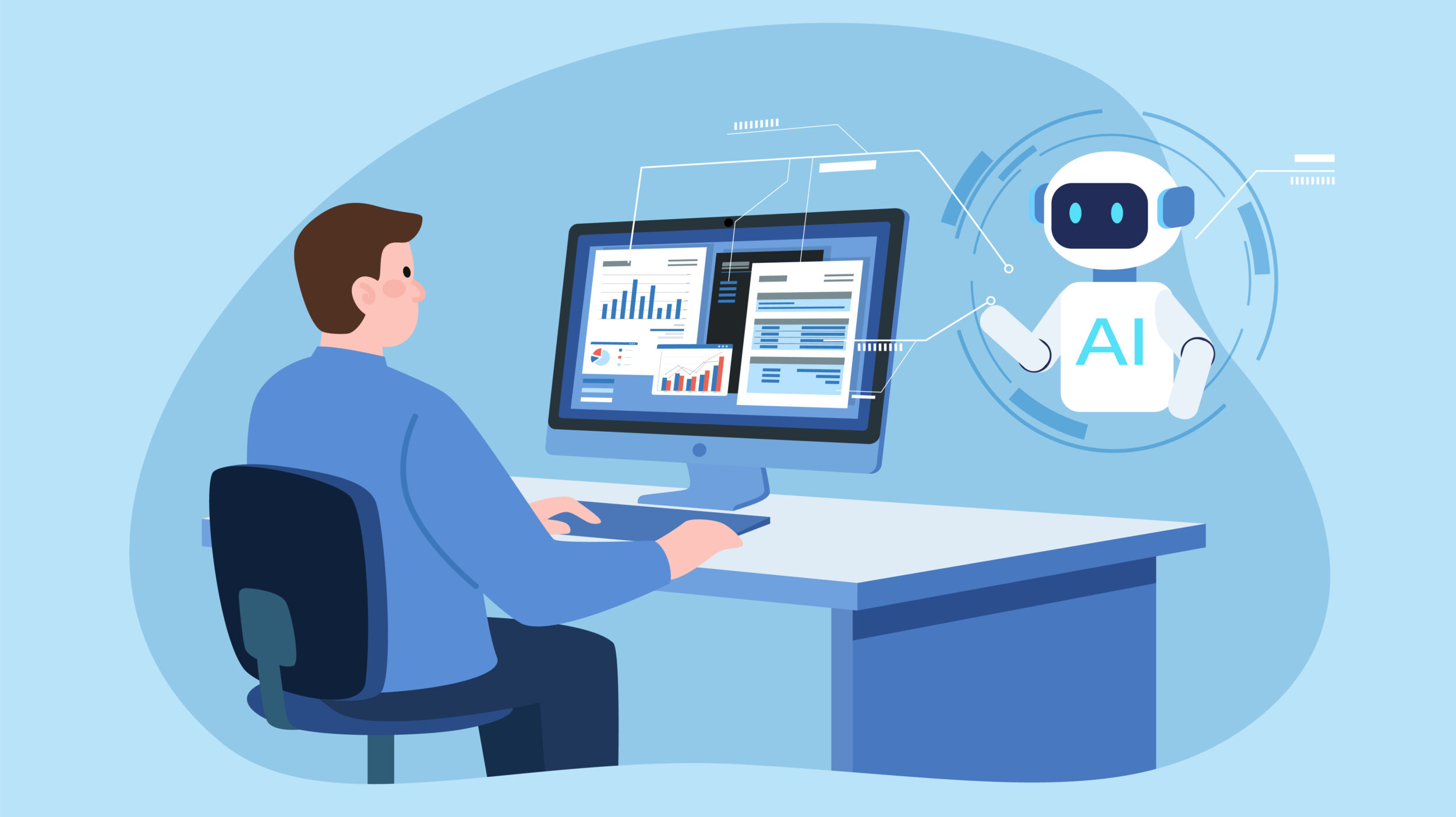
Artificial intelligence is changing the accounting profession.
For students and young professionals considering a career in accounting, that statement can sound either exciting or a little unsettling.
Will AI change what accountants do every day? Almost certainly. Will some of the work traditionally performed by early-career accountants become faster or more automated? It already is.
But at Blackman & Sloop, we do not see that as a reason to be concerned about the future of the profession. We see it as an opportunity to rethink how accountants work, what skills matter most, and how we can use technology to provide an even better experience for our clients and our people.
The future accountant may spend less time completing repetitive tasks and more time analyzing information, solving problems, communicating with clients, and helping businesses make better decisions.
And that is a future we are excited about.
Using AI to Make Good Work Better
At Blackman & Sloop, our approach to AI is purposeful.
We are exploring and developing tools that can support our professional service lines, improve research, streamline processes, analyze information, and help our professionals work more effectively. We are also evaluating how AI can improve internal functions such as training and employee development.
For Henry Kunz, an Audit Associate, the goal is straightforward: use AI as a tool to “increase speed and quality of work.”
Today, that can mean using AI-enabled tools to assist with summaries, memos, emails, research and analysis. Henry has also seen AI assist with reviewing audit reports, helping identify potential errors before reports are finalized. Meeting summaries can allow professionals to focus more fully on conversations rather than concentrating on taking detailed notes.
The technology is not replacing the accountant. It is helping the accountant use time differently.
Derek Haenke, Head of People, sees similar opportunities across the firm.
“We are internally developing tools to support our professional service lines,” Derek explained. “These tools assist with research, help streamline the work process, and develop tools we can
use to help educate our clients so we can partner with them to determine the best path forward.”
For Derek personally, AI has also made it possible to analyze larger amounts of information, compare data, develop training content, and create useful outputs for firm leadership more efficiently.
That matters because saving time is not really the end goal.
What we can do with that time is.
More Technology. More Human Connection.
There is an interesting paradox happening in accounting. As our technology becomes more sophisticated, some of the most human skills in the profession are becoming even more important: communication, curiosity, critical thinking, professional judgment, and relationship building.
AI can help summarize a meeting. It cannot build the relationship that made the conversation meaningful. It can help analyze information. It cannot sit across the table from a business owner, understand what is keeping that person awake at night, and recognize that the question being asked may not be the problem that really needs to be solved. It can help draft an email. It cannot replace the trust built through years of showing up for a client.
That distinction is important to us.
“The burden of the repetitive tasks takes away from the ability to elevate and maintain the client relationship,” Derek said. “Even though check-in calls and grabbing coffee with clients are small things, those small things are what separate us from other firms. It shows we are not just interested in doing the work, but we want to be a part of helping set them up for success.”
Henry sees AI creating that same opportunity. Rather than reducing the importance of accountants, he believes the profession will become “more forward-looking and client relationship based.”
In other words, technology can create more capacity for the part of accounting that has always mattered most: helping people.
AI Does Not Replace Professional Judgment
Embracing AI does not mean accepting everything it produces. Quite the opposite.
Blackman & Sloop carefully and purposefully evaluates new tools before introducing them to our team. Internally developed tools give us the opportunity to shape how those resources
work before they are rolled out. When evaluating external technology, we can also learn from the experiences of other firms and partners within our broader network.
The objective is not to adopt technology simply because it is new. The question is whether it can improve an already strong process without compromising quality, confidentiality, security, or professional standards.
Blackman & Sloop has an AI Code of Conduct and Acceptable Use Policy that establishes expectations for responsible use. And one principle is especially important: There is always a human in the loop.
“Everyone within the firm understands that AI does not replace people,” Derek said. “All outputs must be checked for accuracy because we all know AI is not perfect.”
That expectation reflects a larger truth about the profession. As AI becomes more capable, professional judgment does not become less important. It may become even more important.
Accountants still need to understand the underlying accounting principles. They need to know whether an answer makes sense. They need to recognize missing context, question assumptions, identify risk, and ultimately take responsibility for the quality of the work.
That approach is consistent with the direction of the broader CPA profession, where professional guidance continues to emphasize human review, confidentiality, due care, critical thinking, and professional judgment when AI tools are used.
What Does This Mean for Someone Starting an Accounting Career?
For students looking at the profession from the outside, AI may raise an understandable question:
If technology can do more accounting work, will there still be opportunities for me?
The answer is yes — but the opportunities may look different.
Derek compares the current transition to another technology that fundamentally changed accounting: Excel. When spreadsheet software first arrived, it changed work that had previously been completed manually. Accountants did not disappear. Instead, the profession learned to use a powerful new tool and evolved around it.
“I think of it like Excel,” Derek explained. “When that product first came out, people did not want to use it because it was new and there was no confidence in it. Looking back at it today, it’s a tool that has reshaped how we have worked and changed the direction of the industry just like AI is doing now.”
Henry offers similar advice to professionals worried about their future.
“New technology does not necessarily replace opportunities,” he said. “It just changes the areas in which they are found.”
That change may mean accountants get exposure to analysis, client conversations, problem-solving, and advisory work earlier in their careers. It also changes the skills young professionals should be developing.
The Accountant of the Future Still Needs to Know Accounting
One misconception about an AI-enabled workplace is that technical knowledge will become less important. We believe the opposite may be true. If an AI tool gives you an answer, you still need enough accounting knowledge to determine whether that answer is correct.
That is why Henry encourages young professionals to continue building “communication skills and an understanding of accounting principles.”
Those two skill sets — technical competence and the ability to work effectively with people — create a powerful combination.
Derek would add relationship management and networking to the list.
“AI can do a lot, but it can’t replace a relationship with a human,” he said.
The accountant of the future will need to know how to use technology effectively. But simply knowing how to prompt an AI tool will not be enough. The professionals who distinguish themselves will know how to ask better questions, evaluate the answers, apply accounting principles, understand the client’s business, communicate complex information clearly, and build relationships with the people they serve.
Moving From Service Provider to Strategic Partner
Perhaps the most exciting opportunity created by AI is what it could allow accountants to become. Historically, significant portions of an accountant’s day could be consumed by gathering information, completing repetitive processes, preparing documentation, or performing other necessary but time-intensive work.
As technology becomes better at assisting with some of those responsibilities, professionals gain capacity.
Derek believes that will require everyone in the profession to elevate their role. “We will need to move away from the mindset of simply providing a product to becoming a strategic business partner,” he said.
That means understanding more than a client’s financial statements or tax return. It means understanding the business, the owners, their goals, their challenges, and where they hope to go next. It means asking questions. It means listening. And it means using all the resources available — including technology — to help clients make better decisions.
Building a Career in a Profession That Is Still Evolving
No one can predict exactly what accounting will look like ten years from now. That is part of what makes this such an interesting time to enter the profession. The tools will continue to evolve. Processes will change. Some responsibilities that accountants perform today will become automated, while entirely new responsibilities and career opportunities will emerge.
What is unlikely to change is the need for knowledgeable professionals who can think critically, exercise sound judgment, communicate well, earn trust, and help people navigate complicated decisions.
At Blackman & Sloop, our goal is not to choose between technology and people. It is to use technology to help our people become even better at what they do. Because ultimately, AI may be able to help us work faster, analyze more information, and eliminate some repetitive tasks. But accounting has never really been about the spreadsheet, the report, or the tax return.
It is about the people who rely on us to understand what those things mean.
We think that makes the future of accounting a pretty exciting place to build a career.
Interested in building your career with a firm that is embracing the future while continuing to invest in its people? Explore career opportunities at Blackman & Sloop.